

While you’re fine dining on a classy cruise ship, have you ever sat back and wondered what went into the making of the vessel? While working on a cruise ship has its perks for sure, it’s not always about luxury and leisure – it takes a dedicated team to keep these floating cities in top shape.
Amongst the large crew are refit specialists – skilled professionals responsible for maintaining upgrading and renovating cruise ships to ensure they meet the highest standards of safety, efficiency and comfort. From refreshing guest cabins to overhauling entire sections of the ship, their hard work is all behind the scenes often in dry docks or while the vessel is still in operation.
So, what does life look like for those that take on this unique, fast-paced career at sea? Sancay Akbulut, Interior Project Manager at COLUMBIA cruise services, shares some insight.
Sancay, who studied architecture in Germany, started his career as a yacht exterior and interior designer. Developing a deep passion for vessels, he started his career in the yacht industry, before falling in love with cruise ships. “I was introduced to the Global Dream project, and it completely captivated me,” he tells us. “While the level of detail in cruise ships is not as high as in yachts, the sheer diversity of tasks and the fast-paced production environment was incredibly exciting.”
Working with a much larger team, and dealing with a wide range of suppliers and disciplines, all of which expanded his professional horizon significantly, Sancay adds,
“The steep learning curve and the opportunity to continuously grow my expertise in vessel design and engineering are what I enjoy most about my role.”
But with hard work come challenges, like ensuring that furniture and materials arrive on time and in perfect condition. “One of the biggest challenges is aligning all stakeholders across the supply chain from the owners and designers to the suppliers, logistics providers, and on-site installation teams,” explains Sancay. “Each party operates on its own timeline, and any delay at one stage can have a direct impact on the entire project schedule. In addition, the global nature of cruise refits means materials and furniture often come from different countries, each with its own production lead times, export regulations, and shipping complexities. Ensuring that items not only arrive on time but also in perfect condition requires careful planning, proactive risk management, and continuous communication.”
Quality control is, of course, another critical factor, says Sancay, who explains that items need to be thoroughly inspected before shipping and upon arrival at the shipyard to avoid costly last-minute surprises. Logistics and quality control are crucial in a refit, too – ensuring that everything is in the right place, at the right time, as well as up to standard, is critical! According to Sancay, in order to ensure smooth logistics and maintain quality throughout the refit process, the team has to rely on structured planning, close supplier communication, and hands-on supervision.
So what’s the key to keeping all stakeholders aligned and projects running smoothly? “Clear, transparent, and consistent communication,” he says, adding “every party — ship owners, designers, contractors — and suppliers, has its own priorities, but the project can only succeed if everyone works toward the same goal with a shared understanding of timelines, deliverables, and expectations.” He adds that “a crucial element for maintaining control over timelines is the project scheduler, who plays a vital role in keeping all activities aligned with the overall project plan and ensuring that any potential delays are identified and addressed early.”

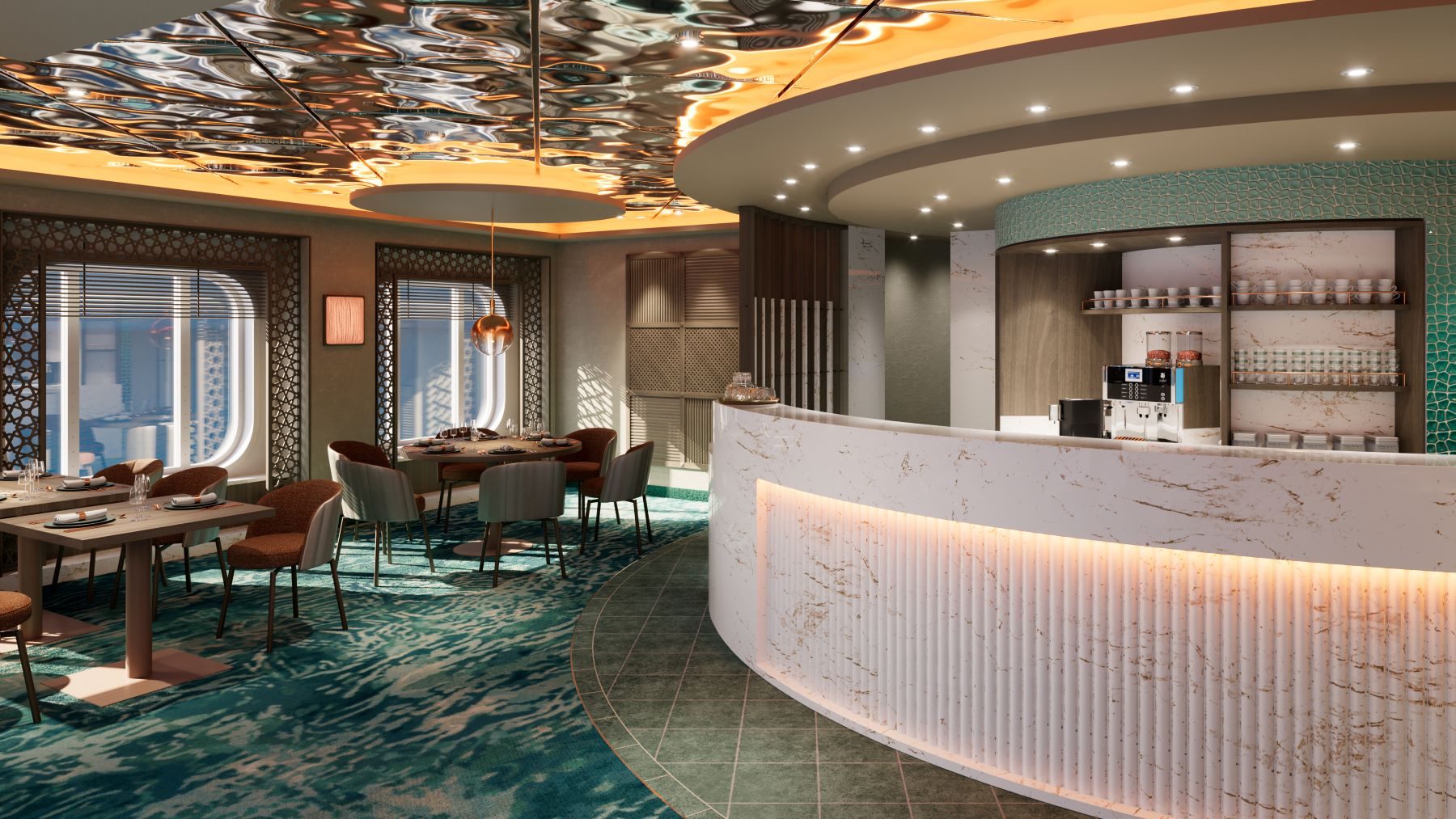
The job doesn’t end there though. Onsite inspections are a big part of the job, too. And that can get tricky! For Sancay, this was in the form of a carpet issue during a refit onboard when the carpets for one of the restaurant venues didn’t match the new layout. “During the inspection, I decided to clear the area by sending all contractors out for an early lunch, giving me the space to fully unroll and review the different carpet sections,” he explains. “From my previous experience, I knew this type of error was unlikely due to the production process itself. Carpet rolls for large areas are produced using computer-aided weaving looms, which follow the latest approved drawings with precision. This made me suspect a handling or installation error instead. With the help of some crew members and printed drawings, we carefully reviewed the carpet pieces first up close, then from a distance to better see the overall pattern alignment. It became clear that the carpet layers had not followed the correct unpacking and installation guidelines, leading to misplaced sections. Fortunately, the issue was not irreparable, and we were able to correct the layout with the installers.”
When it comes to balancing creative vision with the practical realities of implementation, Sancay says it is one of the most challenging aspects of any refit project.
“Architects and designers are often deeply committed to their creative concepts and the specific materials or products they select. My approach is to respect the design intent as the starting point and then systematically assess its feasibility from technical, logistical, budgetary, and scheduling perspectives. Some design ideas are quickly ruled out because they exceed the owner’s budget, ultimately the owner has the final approval on both design and cost.”
Giving credit to the whole team for all the hard work that goes into the refitting of a cruise ship, Sancay shares that “none of this would have been possible without a team of skilled Area Managers and Superintendents, all highly experienced and senior professionals who were key players in keeping their respective areas on track. Their expertise, problem-solving skills, and ownership were crucial to the overall project success.”

As for his advice to someone starting out in the industry? Spending as much time as possible on site is his key advice, as that will be where they really learn how things come together and where you build the relationships and hands-on knowledge that are essential to succeed. “Be ready to embrace complexity and stay flexible. Cruise ship refits are fast-paced, highly-demanding projects where you need to juggle design requirements, technical challenges, tight timelines, and international supply chains all while working in a constantly changing environment on board,” he shares.
“A strong technical foundation is important, but equally valuable are problem-solving skills, clear communication, and the ability to work collaboratively with people from different cultures and disciplines. There’s rarely a straightforward solution, so you need to think on your feet, adapt quickly, and always keep the bigger picture in mind.”
Describing his job in three words, Sancay says: Dynamic, challenging, and rewarding!

